Why Tire Safety Can’t Be Ignored
Every time you start a vehicle, the tires are the only contact points between you and the road. A worn or under‑inflated tire can increase stopping distance by up to 30%, cause uneven wear, and even lead to a blowout at high speed. Understanding how to check tire safety before driving protects your passengers, preserves fuel efficiency, and extends the life of your tires.
Step‑by‑Step Visual Inspection
A quick glance can reveal the most serious problems. Follow this checklist before you even turn the ignition:
- Debris and foreign objects: Remove stones, nails, or glass lodged in the tread.
- Cracks or cuts: Look for cuts, punctures, or cords showing on the sidewall.
- Bulges and blisters: Any raised area signals internal damage that requires immediate attention.
- Uneven wear patterns: Check if one side of the tire is more worn than the other; this often points to alignment or suspension issues.
Measuring Tread Depth Accurately
The legal minimum tread depth in many regions is 1.6 mm (about 2/32 of an inch). Anything less compromises grip, especially on wet surfaces.
- Use a tread depth gauge or a simple penny test: insert a U.S. penny so the heads face upward. If you can see the top of Lincoln’s head, the tread is below the safe limit.
- Measure at three points around the tire—inner, middle, and outer tread—to spot localized wear.
- Record the shallowest reading; replace the tire if it’s at or below the minimum.
Checking Tire Pressure the Right Way
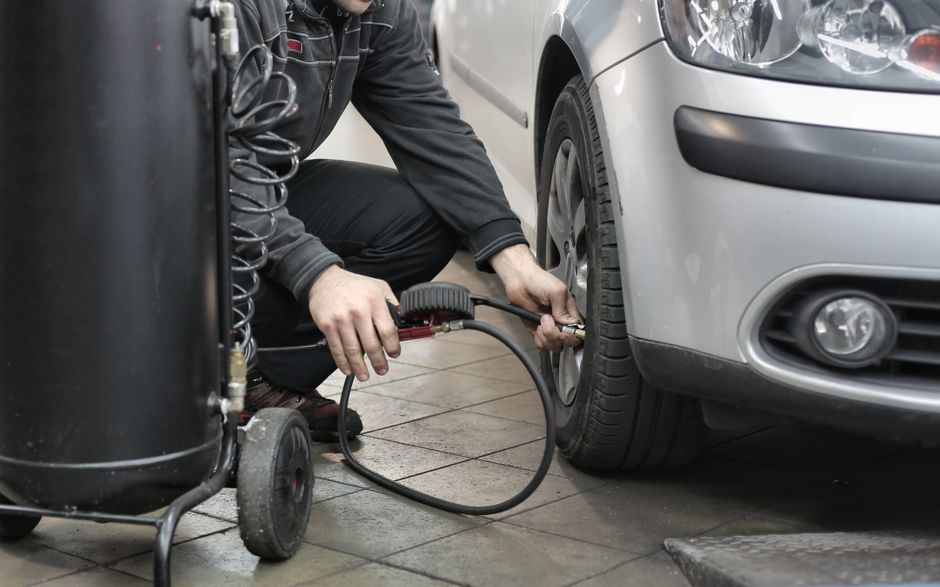
Incorrect pressure affects handling, fuel consumption, and tread wear. Follow these steps for an accurate reading:
- Cool the tires: Check pressure when the car has been stationary for at least three hours or after a short drive (under 5 km).
- Use a calibrated digital gauge: Analog gauges can be off by up to 5 psi.
- Reference the manufacturer’s recommendation: Find the correct psi on the driver’s door jamb or in the owner’s manual—not on the tire sidewall.
- Adjust as needed: Add air to low‑pressure tires or release air from over‑inflated ones, then re‑check after a minute.
Sidewall Inspection: The Hidden Danger Zone
Sidewalls endure the most stress from potholes and curbs. Look for:
- Dry rot: A chalky or cracked appearance indicates aging rubber.
- Bulges: These are caused by internal separation and demand immediate replacement.
- Exposed cords: If you see the fabric layers, the tire is compromised.
Assessing Tire Age and Overall Wear
Even if tread depth looks adequate, a tire older than six years can become brittle. Locate the DOT code on the sidewall; the last four digits represent the week and year of manufacture (e.g., 2319 = 23rd week of 2019). Replace tires older than 10 years regardless of appearance.
Professional Tools That Simplify the Process
While a basic gauge and tread stick are enough for most drivers, shop‑quality tools can speed up the routine:
- Electronic tire pressure monitoring system (TPMS) readers: Quickly verify sensor data without disconnecting the battery.
- Laser tread depth meters: Provide a digital readout to the nearest 0.1 mm.
- Wheel balancers: Detect imbalance that can cause uneven wear over time.
Quick Pre‑Drive Routine (Under Two Minutes)
For commuters who can’t afford a full inspection every day, this rapid check still covers the essentials:
- Visually scan each tire for obvious damage.
- Press the tread gauge at the deepest section.
- Check pressure on the front left tire—if it’s correct, the remaining three are likely close to spec.
If anything feels off, stop and investigate before hitting the road.
Common Myths About Tire Safety
Dispelling false beliefs helps you focus on what truly matters:
- Myth: “Tires look fine, so they’re safe.” – Reality: Internal damage isn’t visible; a bulge or a subtle loss of pressure can be fatal.
- Myth: “All tires wear evenly.” – Reality: Mis‑alignment, heavy loads, or improper inflation cause uneven wear.
- Myth: “Seasonal changes don’t affect pressure.” – Reality: For every 10 °F temperature drop, tire pressure falls about 1 psi.
When to Replace Tires Immediately
Even the most diligent driver must know the red‑line signs:
- Sidewall bulges or blisters.
- Visible cuts deeper than ¼ inch.
- Tread depth at or below the legal minimum.
- Age over ten years, regardless of condition.
- Repeated loss of pressure after a short drive.
In these cases, replace the tire before the next trip; the risk of a blowout outweighs the cost of a new set.
Putting It All Together
Integrating the steps into a habit ensures you never overlook a critical safety check. Keep a small tire‑inspection kit—gauge, tread stick, and a flashlight—in your glove compartment. Schedule a professional inspection at least twice a year, but perform the quick visual and pressure check before every long journey.
Conclusion
Knowing how to check tire safety before driving isn’t a chore; it’s a simple routine that saves lives, money, and headaches. By scanning for damage, measuring tread depth, verifying pressure, and respecting tire age, you create a reliable foundation for every mile you travel. Make these checks a habit, and your tires will reward you with consistent performance and peace of mind.
Comments (0)
No comments yet. Be the first to comment!
Leave a Comment